While much of the global robotaxi conversation has focused on Waymo’s expansion across American cities and into London and Tokyo, a quieter but equally significant story is unfolding closer to home. WeRide — a NASDAQ and Hong Kong Stock Exchange-listed autonomous driving company founded in 2017 — has built one of the world’s most geographically diverse robotaxi networks, with commercial operations now running on the streets of Singapore and fully driverless services launched in the United Arab Emirates. For Australians watching the robotaxi industry develop, WeRide’s footprint in Asia and the Middle East offers some of the most directly relevant evidence yet that autonomous taxis can work in densely regulated, non-American urban environments. Understanding what the Asia-Pacific robotaxi expansion means for Australia starts with understanding companies already operating in this part of the world.
A Different Kind of Robotaxi Company
WeRide sits in an interesting position in the global autonomous driving landscape. Unlike Waymo, which remains focused on ride-hailing, WeRide has built a broader platform spanning five product lines: robotaxi, robobus, robovan, intra-city delivery vehicles and autonomous sanitation equipment. The company describes its core technology, WeRide One, as a universal autonomous driving platform that supports Level 2 through Level 4 autonomy across all of these product types.
The scale of operations as detailed on the WeRide company website is significant: more than 1,600 vehicles across 40 or more cities in 12 countries, with over 55 million kilometres of autonomous driving accumulated across nearly six years of continuous fleet operation. The company holds autonomous driving permits in eight countries — China, the UAE, Singapore, France, Switzerland, Saudi Arabia, Belgium and the United States — making it the only autonomous driving technology company to hold permits across such a geographically diverse set of markets. For a sense of what the technology behind autonomous taxis involves, WeRide’s scale of validation provides a useful benchmark.
Singapore: Southeast Asia’s First Public Robotaxi Ride Service
For Australian readers, Singapore is the most immediately relevant data point. The two countries share many characteristics: common law governance, high standards of road safety regulation, English as the primary administrative language and comparably dense urban centres. What happens on Singapore’s roads tends to be watched closely in Canberra and state transport departments alike.
According to WeRide’s official Singapore launch announcement, the company launched its public autonomous ride service — the Ai.R (Autonomously Intelligent Ride) — in Singapore’s Punggol district in partnership with Grab on 1 April 2026. The launch followed Singapore’s Land Transport Authority approving the routes and the vehicles passing the Milestone 1 (M1) assessment. In this initial phase, every Ai.R ride includes a trained Grab Safety Operator onboard, with rides free until commercial service begins in mid-2026. The vehicles used are the WeRide GXR, a purpose-built five-seat robotaxi, and an eight-seat Robobus. Both vehicles passed Singapore’s Milestone 1 regulatory assessment, making them the first autonomous vehicles designated for the Punggol area to receive this certification.
The sensor package on the GXR is built for real-world urban conditions: cameras and lidar sensors covering 360 degrees detecting objects up to 200 metres away, engineered to operate reliably in heavy rain. Prior WeRide operations in the Punggol area served tens of thousands of passengers. WeRide’s robobus also made history at Singapore’s Resorts World Sentosa in July 2025, becoming the first autonomous vehicle in Southeast Asia to operate fully without a safety officer on board — a significant regulatory milestone that reflects the level of trust Singapore’s authorities have developed in the technology.
The UAE: Fully Driverless Commercial Operations Across Three Emirates
WeRide’s Middle Eastern operations add another dimension to the global picture. The company received a fully driverless commercial permit in Abu Dhabi — the first such permit issued outside the United States — and launched fully driverless fare-charging commercial operations in Dubai on 2 April 2026, with authorisation from Dubai’s Roads and Transport Authority. A third emirate, Ras Al Khaimah, began pilot operations in October 2025, bringing WeRide’s UAE footprint to three separate jurisdictions.
As detailed in WeRide’s Dubai commercial launch announcement, the service began in the Jumeirah and Umm Suqeim coastal districts, with planned expansion into Dubai Silicon Oasis, Dubai Investment Park and other areas. The fleet operating across the Middle East exceeded 200 vehicles at launch, with a commitment to deploy at least 1,200 robotaxis across Dubai, Abu Dhabi and Riyadh by the end of 2026. WeRide’s Middle Eastern subsidiary had already reached operational profitability by 2025 — a commercial milestone that very few autonomous vehicle operations anywhere in the world have achieved.
The UAE operating environment is also worth noting: extreme heat, high solar glare, fast-moving multi-lane roads and a diverse international population of passengers. That WeRide’s systems perform commercially in these conditions speaks to the robustness of the underlying technology, and connects to the broader safety evidence now accumulating for autonomous taxis globally.
The Technology: WeRide One and the GXR Platform
The vehicle at the centre of WeRide’s recent expansion is the GXR robotaxi, showcased at NVIDIA GTC 2026 running on the NVIDIA DRIVE Hyperion autonomous computing platform. WeRide has partnered with Geely Farizon to deliver 2,000 purpose-built GXR vehicles by 2026, providing the production scale that commercial robotaxi operations demand. The Geely Farizon partnership connects WeRide’s software platform to one of China’s largest vehicle manufacturers — a pairing that mirrors the vehicle-technology joint ventures seen elsewhere in the industry.
The WeRide One platform powering all of the company’s vehicles is built to handle the full range of L2 to L4 autonomy requirements across different product types. The engineering challenge for any robotaxi operator is handling the unpredictable edge cases of real urban driving — pedestrians stepping unexpectedly from kerbs, sudden lane changes, debris on the road — and WeRide’s 55 million kilometres of accumulated data across 12 countries provides a uniquely diverse training base. Our explainer on robotaxi sensor and AI technology covers how these systems work in practice.
Scale, Growth and What the Numbers Reveal
WeRide’s commercial momentum over the past 18 months has been substantial. Robotaxi revenue grew 836.7 per cent year-on-year according to the company’s financial disclosures, reflecting the shift from testing-phase operations to genuine commercial activity. The company has announced plans to expand commercial robotaxi services to 15 additional cities globally and is targeting tens of thousands of vehicles worldwide by 2030.
The dual listing on NASDAQ (ticker: WRD) and Hong Kong Stock Exchange (ticker: 0800) gives WeRide a level of public accountability and financial transparency that is relatively unusual in the autonomous vehicle sector, where many operators remain private. Recognition from Fortune’s 2025 Change the World and Future 50 lists adds independent validation of the company’s trajectory. WeRide also won first place in the Dubai World Challenge for Self-Driving Transport — a competitive evaluation that assessed performance in real urban conditions. This mirrors the broader pattern where international robotaxi expansion is accelerating among operators that have proven their technology commercially.
What WeRide’s Trajectory Means for Australia
WeRide does not currently operate in Australia and has made no public announcements about Australian plans. But the relevance of its Singapore and UAE operations to Australia’s robotaxi future is direct. Singapore’s regulatory pathway — a phased approach managed by the Land Transport Authority, progressing from supervised testing to fully driverless commercial operations — is closely analogous to the framework being developed by Australia’s National Transport Commission. The NTC’s automated vehicle program is designed to enable exactly the kind of evidence-based, staged rollout that Singapore has demonstrated works in practice.
Australia’s most robotaxi-ready cities — Sydney, Melbourne and Brisbane — share several characteristics with Punggol: mixed residential and commercial land use, well-mapped road networks and a regulatory culture that is open to managed innovation. WeRide’s presence in Singapore means that if the company pursues Australian approvals, it would arrive with direct operational experience in a jurisdictional environment that Australian transport authorities will find highly legible.
The realistic timeline for Australian robotaxi services remains tied primarily to the completion of the national regulatory framework, expected to enable conditional deployment from 2027. WeRide’s rapid expansion — from eight permitted countries to a target of tens of thousands of vehicles by 2030 — suggests that when that framework is ready, operators with proven records in comparable markets will be well positioned to move quickly.
Sources
- WeRide — Official Website and Company Overview
- WeRide — About: Company Profile, Leadership and Global Presence
- WeRide — Singapore GXR and Robobus Ai.R Service Launch Announcement
- WeRide — Dubai Fully Driverless Robotaxi Commercial Operations Launch
- WeRide Investor Relations — GXR Powered by NVIDIA DRIVE Hyperion at GTC 2026
- National Transport Commission — Automated Vehicle Program
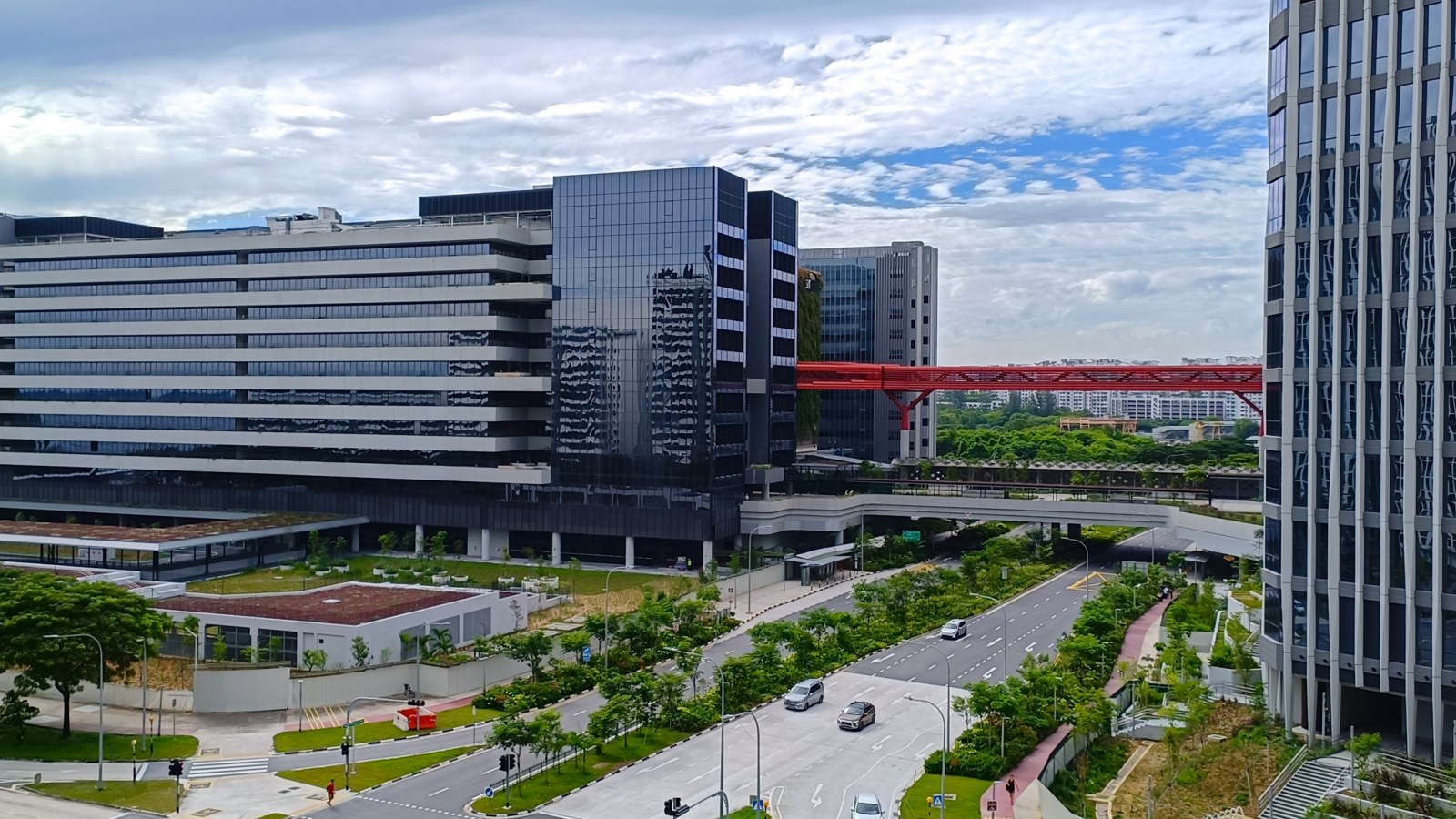
- Featured image: Aerial view of New Punggol Road, Singapore by FN-082, CC BY-SA 4.0, via Wikimedia Commons