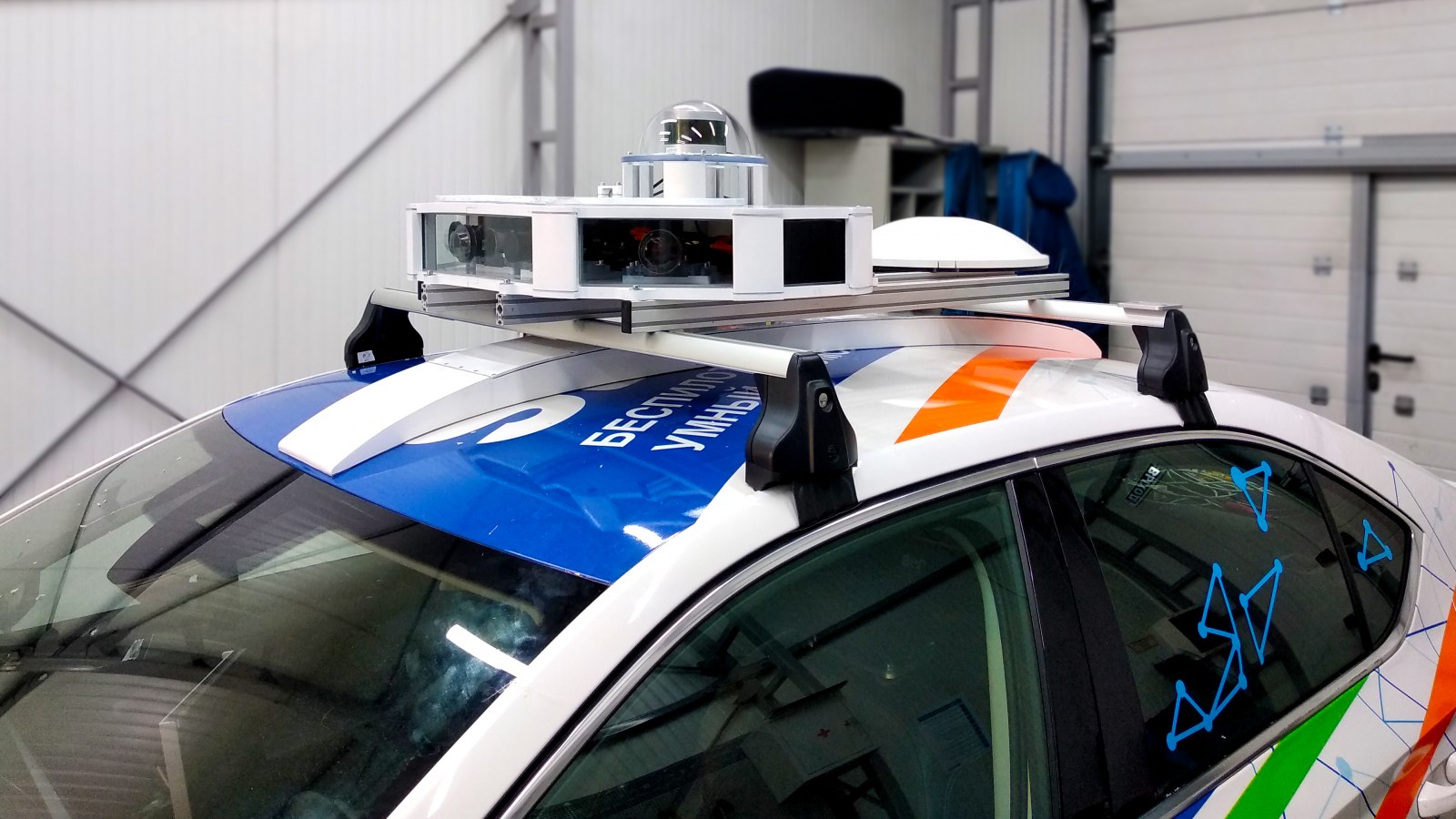
The world’s most active robotaxi operator is going global, and Australia is watching closely. Waymo — the Alphabet-backed company that has logged more fully autonomous commercial miles than any other operator on earth — is now laying the groundwork for fully driverless ride-hailing services in London and Tokyo, marking its first sustained expansion beyond the United States. For Australian riders and policymakers, these moves are more than headline news. They represent a working proof of concept for the regulatory, operational and technical challenges Waymo will face in markets that, in many ways, closely resemble Australia’s own. Understanding what Waymo’s scale of operations represents and the technology powering this expansion helps explain why this global moment matters so much for Australia’s own robotaxi future.
A Safety Record That Underpins the Expansion
Waymo’s global push is built on a foundation of independently verifiable safety data. According to Waymo’s own safety impact page, by the end of 2025 the company had completed 170.7 million fully autonomous rider-only miles — the equivalent of 200 human lifetimes of driving. That is not a marketing claim but a peer-reviewed dataset, and the numbers are striking.
Across that distance, the Waymo Driver was involved in:
- 92 per cent fewer crashes causing serious or fatal injuries compared with human drivers operating in the same areas
- 83 per cent fewer crashes involving airbag deployment versus the human benchmark
- 82 per cent fewer crashes involving any injury at all in the same comparison
- 92 per cent fewer crashes involving pedestrian injuries — a metric with direct relevance to dense urban environments like Sydney and Melbourne
Operating at more than four million autonomous miles every week by late 2025, the analysis on Waymo’s site suggests the system is preventing approximately one serious-injury crash every eight days. These figures have been reviewed by the Insurance Institute for Highway Safety, the University of Michigan Transportation Research Institute and Virginia Tech Transportation Institute. They represent the strongest published evidence that autonomous ride-hailing can operate more safely than human-driven vehicles at commercial scale — and they are the foundation on which every international expansion decision rests. For more on the safety case for autonomous taxis, this data sits at the heart of the ongoing discussion.
Hello London: Waymo’s First Truly International Step
In October 2025, Waymo announced it was coming to London — a city that in many respects resembles the conditions Waymo would face in Sydney or Melbourne. London drives on the left, uses English-language signage, operates a complex mix of road users including cyclists and double-decker buses, and has an active regulatory environment that requires careful engagement with both local and national government.
By April 2026, training specialists were driving Waymo vehicles across London streets, preparing the system for fully autonomous operation. Waymo’s fleet operations partner in London is Moove, with all-electric Jaguar Land Rover I-PACE vehicles fitted with the Waymo Driver technology. The company is simultaneously building out its UK workforce and service infrastructure while engaging with local and national leaders to secure the necessary regulatory approvals for commercial ride-hailing.
The London launch matters for Australia for a specific reason: it demonstrates that Waymo’s system can be adapted to right-hand-drive environments where vehicles drive on the left side of the road — which is precisely the situation on Australian roads. Every operational learning from London is directly transferable to a future Australian deployment.
Tokyo and the Challenge of Complex Urban Streets
Waymo’s parallel expansion into Tokyo goes further still. Japan’s capital is widely regarded as one of the world’s most demanding urban driving environments — dense traffic, narrow lanes, complex intersections, heavy pedestrian activity and a unique mix of road rules. According to Waymo’s own blog, the company is working with established Japanese mobility partners Nihon Kotsu and GO, and has validated its autonomous systems across more than 300 million kilometres of driving data to prepare for the city’s unique conditions.
Waymo also rolled out multilingual support for its app in early 2026 — now including Japanese, Korean, Polish, Italian, French, German and British English — reflecting the deliberate infrastructure the company is building for global operation rather than a simple copy-paste of the US model.
For Australia, the Tokyo expansion sends a clear signal: Waymo is not limited to wide, grid-pattern American cities. The same platform operating in Phoenix and Los Angeles is being adapted for narrow Tokyo laneways — suggesting Australian cities, with their own distinctive road layouts, are well within reach of the technology.
The 6th-Generation Waymo Driver: Built for Global Scale
Underpinning the international expansion is a significant hardware upgrade. Waymo’s sixth-generation Driver, launched in February 2026, brings meaningful improvements that directly support broader deployment:
- 17-megapixel imaging — a breakthrough in automotive camera resolution that handles shadows, glare and complex lighting conditions simultaneously
- Fewer sensors, better performance — the new generation uses less than half the cameras of its predecessor while delivering superior detection across all conditions
- Extreme weather capability — lidar that penetrates heavy rain, snow and road spray, with integrated cleaning systems for camera clarity in all conditions
- Lower unit costs — leveraging falling lidar and radar component prices alongside economies of scale at Waymo’s Phoenix manufacturing facility, which is scaling toward tens of thousands of units annually
Cost reduction is particularly significant for international expansion. A lower hardware cost per vehicle means Waymo can establish economically viable operations in new markets more quickly. Combined with the economic case for autonomous taxis in Australia, a more affordable vehicle platform strengthens the business model for any future Australian operator.
What Australia Would Need for a Full Waymo Launch
Waymo’s London experience offers a practical checklist for what an Australian launch would require. The company has had to secure regulatory approval from both local authorities and national government, establish fleet and maintenance infrastructure, train operational staff, adapt its software to local road rules and signage, and engage with transport authorities on pickup and drop-off protocols.
In Australia, the equivalent pathway runs through the National Transport Commission’s automated vehicle regulatory program, which is developing the national framework for commercial autonomous vehicle operation. State governments — particularly New South Wales and Victoria — would also need to grant operational approvals for individual cities, similar to the way US states have individually approved Waymo’s expansion across Phoenix, San Francisco and Los Angeles.
The good news is that Australia’s regulatory approach is actively tracking global developments. The NTC program is designed to accommodate exactly the kind of safety data Waymo is producing, and the Australian cities most ready for robotaxis — Sydney, Melbourne and Brisbane in particular — already have the population density, mapping data and infrastructure investment to support a commercial launch.
The Case for Cautious Optimism
Waymo’s trajectory over the past 18 months has been remarkable. The company completed 14 million trips in 2025 — more than triple the previous year — and is targeting one million fully autonomous rides every week by the end of 2026. Nashville, Miami and Orlando have all received the service in the first months of 2026, with Chicago, Boston and New York in the planned expansion pipeline. London and Tokyo bring the international dimension.
For Australia, the question has shifted from whether a company like Waymo could ever operate here to when the regulatory and commercial conditions will align. The safety record is established. The technology is proven in diverse urban environments including cities where vehicles drive on the left side of the road. The investment backing is substantial.
The realistic timeline for Australian robotaxis has consistently pointed to the late 2020s as the likely window for commercial service, contingent on the national regulatory framework being finalised and an operator choosing to establish local infrastructure. Waymo’s global momentum suggests that when those conditions are met, the operator most likely to arrive first already has Australia on its radar.
Sources
- Waymo — Safety Impact: 170 Million Miles of Data
- Waymo Blog — Hello London! Your Waymo Ride Is Arriving (October 2025)
- Waymo Blog — Beginning Fully Autonomous Operations with the 6th-Generation Waymo Driver (February 2026)
- Waymo Blog — 2025 Year in Review: Delivering More for Our Riders
- Waymo — City Updates and Expansion Announcements
- Waymo — Frequently Asked Questions
- National Transport Commission — Automated Vehicle Program
- Featured image: Autonomous vehicle sensors and equipment by Alena Nesterova, CC BY-SA 4.0, via Wikimedia Commons