On 28 April 2026, Waymo announced it had begun manual driving operations in Portland, Oregon — sending human-operated vehicles through the city’s streets not to carry passengers but to teach the autonomous system what Portland looks like. The announcement received less attention than Waymo’s major commercial expansions, yet it contains something more practically useful for anyone thinking about how Australian cities might eventually receive robotaxi services: a clear view of what actually happens in the years before a robotaxi picks up its first paying passenger in a new location. The process is longer, more methodical and more collaborative with local government than most public discussions suggest. Understanding it matters for Australian transport planners, because the steps Portland is going through now are the same steps that Sydney, Melbourne or Brisbane would need to go through — and the earlier local authorities understand what those steps involve, the better positioned they will be to begin them.
The Manual Mapping Phase: Where Every Launch Begins
Waymo’s Portland entry began not with autonomous vehicles but with conventional ones. The first step in onboarding a new city is what the industry calls the mapping or familiarisation phase: human drivers cover the target operating area extensively, collecting data about road geometry, lane markings, intersection behaviour, sign placement, traffic signal timing and the countless local idiosyncrasies — construction zones, unusual kerb configurations, pedestrian crossing patterns — that differ from city to city. The autonomous systems that power robotaxis are trained on detailed, high-definition maps that encode far more information than a standard navigation map. Those maps have to be built from scratch for every new geographic area, and that process takes months, not weeks.
Why Portland Was Selected
Waymo described Portland as a city that “balances its independent spirit with a deep commitment to sustainable, forward-thinking living” — corporate language, but it points to something genuinely relevant. Cities with strong sustainability commitments and progressive transport policies tend to have local government attitudes that are more receptive to autonomous vehicle integration. Portland Mayor Keith Wilson publicly endorsed Waymo’s arrival in terms of the city’s Vision Zero goals — the target of eliminating traffic fatalities and serious injuries entirely. That kind of explicit political alignment between an operator’s safety mission and a city government’s stated transport objectives is not accidental; it is a factor that Waymo evaluates before selecting a new market. Cities where autonomous vehicles can be framed as a tool for achieving existing public transport safety goals are easier operating environments than cities where the technology arrives without a clear alignment with local priorities.
The Staged Progression From Manual to Autonomous
After the initial mapping phase, the typical progression moves through several distinct stages before public commercial service becomes available. Safety drivers — human operators who can intervene if the autonomous system encounters a situation it cannot handle — begin covering the mapped area with the autonomous system engaged but with human oversight. Data from those runs is used to identify edge cases: unusual intersections, complex merging scenarios, pedestrian behaviours that the system has not encountered before. The system is retrained and improved. Gradually, the proportion of miles driven without human intervention increases. At some point — measured in months or years depending on the complexity of the operating environment — the safety driver rate drops to zero and public service begins. The safety record that operators can point to when that moment arrives is built entirely during this extended pre-commercial phase.
The Role of Local Government Partnership
What the Portland announcement makes explicit is that a robotaxi launch is not something an operator does to a city — it is something an operator does with a city. The references to Vision Zero, to the Portland Mayor’s statement, and to MADD (Mothers Against Drunk Driving) Oregon’s endorsement of Waymo’s role in preventing impaired driving incidents all point to a pattern of relationship-building that precedes the autonomous vehicles themselves. Operators spend time with city traffic engineers, emergency services and disability advocacy groups before the first autonomous mile is driven in public. This is partly regulatory — local authorities need to be satisfied that the service is safe and that they understand the incident response protocols — and partly about building the community understanding that makes public acceptance possible. Australian public surveys show significant scepticism about autonomous vehicles, and that scepticism is most effectively addressed at the local level, through the kinds of community engagement that precede a commercial launch, not after it.
What “Vision Zero” Has to Do With It
Vision Zero is a road safety philosophy, originating in Sweden in the 1990s, that holds that no loss of life on public roads is acceptable and that road systems should be designed to eliminate fatal and serious injury crashes entirely. It has been adopted as an explicit policy goal by a growing number of Australian state transport departments and local councils. The alignment between Vision Zero goals and the potential safety benefits of autonomous vehicles is direct: Waymo’s own published data shows a 92 per cent reduction in serious injury crashes compared to human drivers across comparable populations. An autonomous vehicle that never drives impaired, never exceeds the speed limit and responds to hazards in milliseconds rather than seconds is, in principle, precisely the kind of intervention that a Vision Zero framework is designed to encourage. Australian cities that have adopted Vision Zero commitments have a ready-made rationale for engaging constructively with robotaxi operators well before those operators are ready to launch.
Applying the Portland Model to Australian Cities
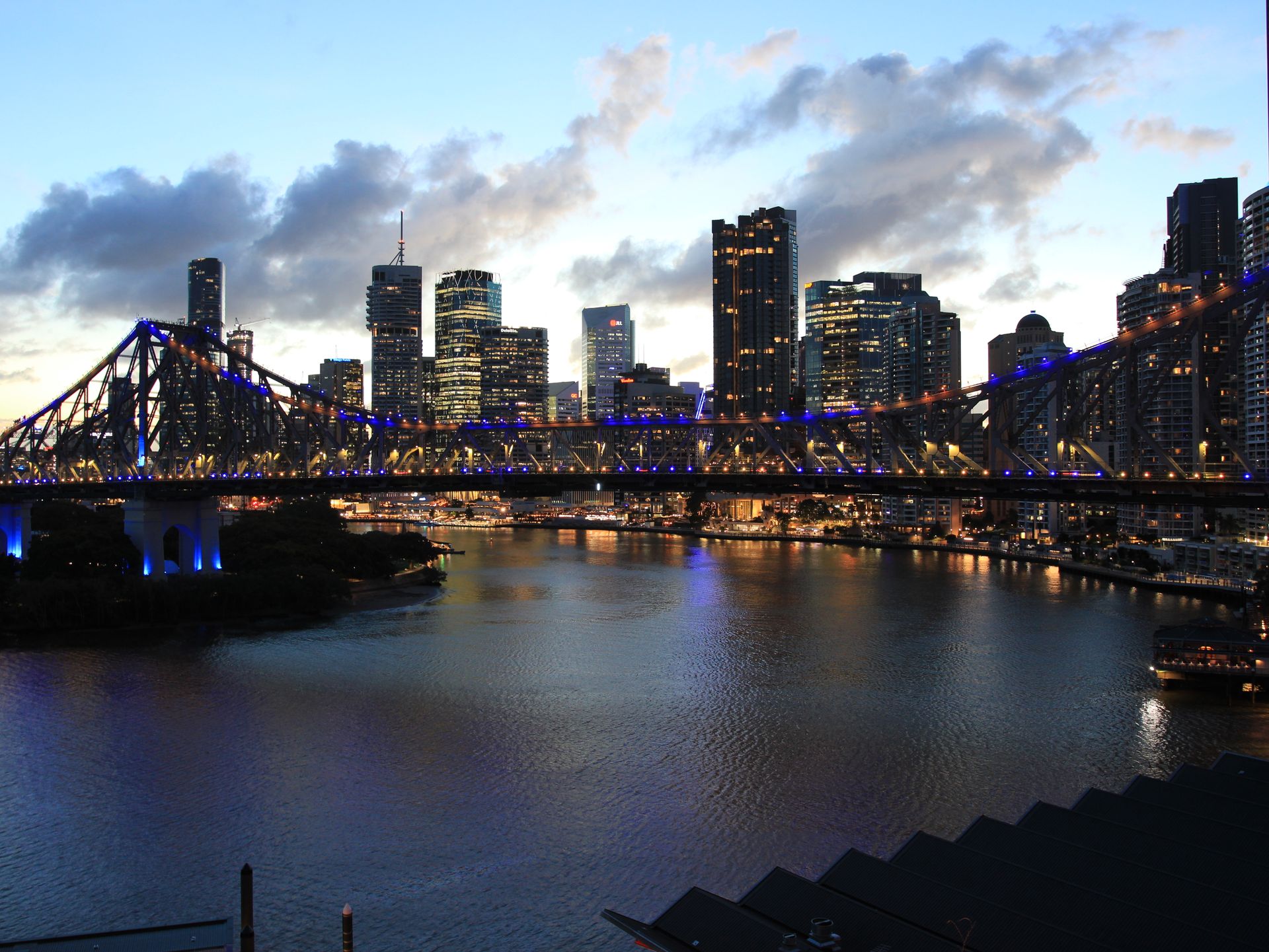
Different Australian cities have different characteristics that would affect how the Portland-style onboarding process would work in practice. Sydney’s complex road network — with its irregular street grid, high-volume cross-harbour corridors and significant variation between inner-city density and suburban arterials — would require more extensive mapping than a more regularly structured city. Melbourne’s tram network introduces a category of road interaction that most existing robotaxi systems have not been optimised for: sharing lanes with light rail vehicles operating on fixed tracks. Brisbane’s rapid urban growth and its comparatively newer road infrastructure may present a more tractable initial environment for high-definition mapping. Each city’s traffic management authority, emergency services and disability access infrastructure would need to be engaged separately, following the partnership model that Portland exemplifies.
What Australian Authorities Can Do Now
The gap between Portland’s April 2026 mapping launch and a hypothetical Australian city beginning the same process is not only a gap in time — it is a gap in institutional readiness. The National Transport Commission’s regulatory framework provides the legal foundation, but individual state road authorities, emergency services agencies and local councils would need to develop the specific protocols, data-sharing agreements and community engagement processes that the partnership model requires. The timeline for Australian commercial robotaxi services is, in part, a function of how quickly those institutional preparations are made. Portland’s experience suggests that the technical readiness of the operator and the institutional readiness of the city are equally important — and that the cities that begin their preparation earliest are likely to see service soonest, regardless of which operator eventually crosses the line first.